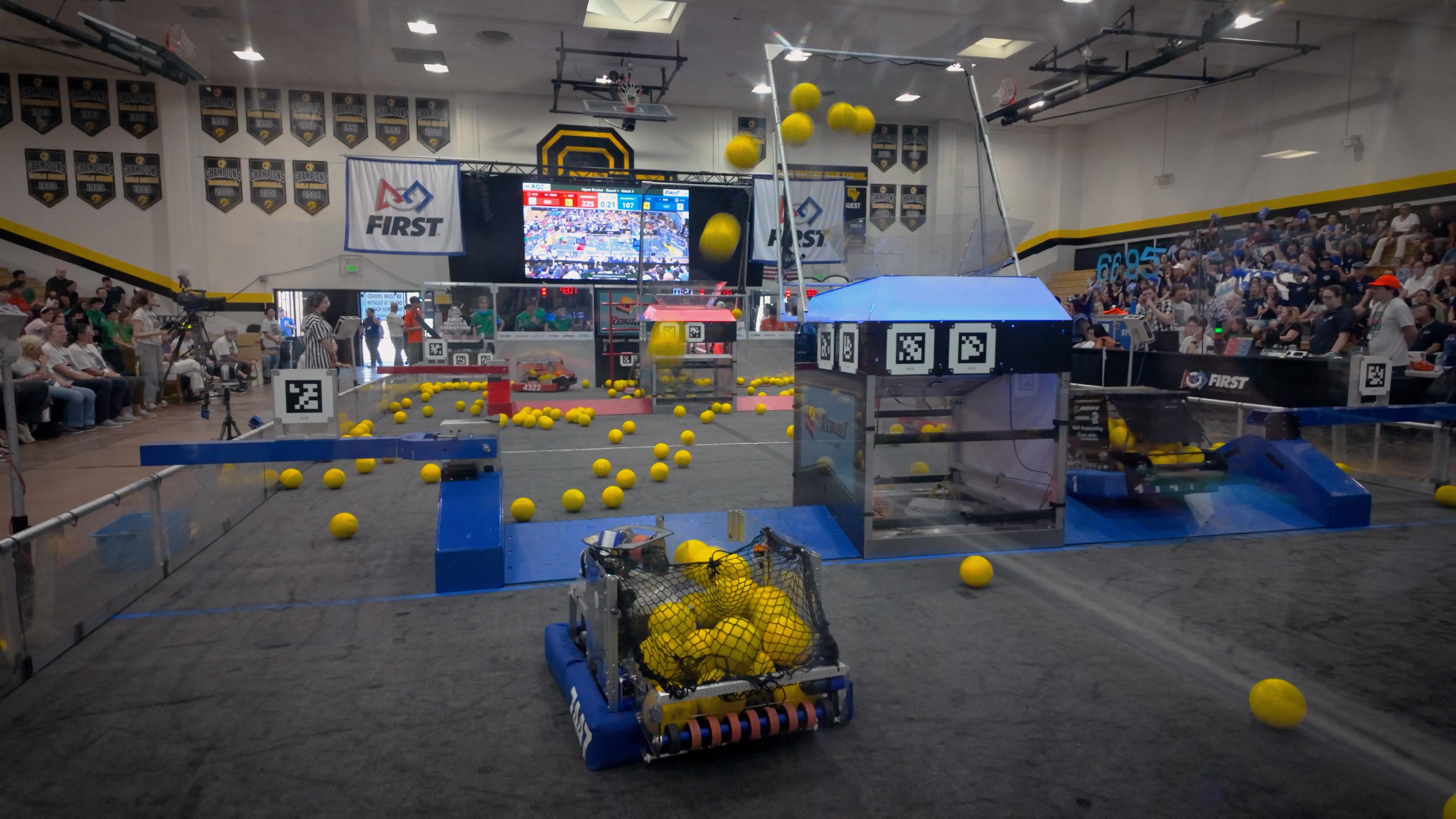
A refreshed look at our 2026 robot, built around fast collection, staged feeding, flexible aiming, and PhotonVision-backed localization.
Our 2026 robot is centered on shortening the path from pickup to score. The chassis is tuned to move aggressively, the feed path is designed to keep pieces settled before release, and the aiming stack is built so drivers and software can share the work of making each shot cleaner.
The rebuild process followed the same priorities as the final robot: keep the architecture clear, validate subsystems early, and turn that iteration into a machine that could move quickly without giving up control.
Drivetrain
14.9 ft/s
MK5N compact swerve modules with Kraken X60 drive and Kraken X44 steer motors keep the robot fast and precise.
Aiming Range
540 deg
The turret can keep scoring angles open without forcing the chassis to square up to every shot.
Shot Control
60-90 deg
An adjustable hood and physics-based shot tuning help keep release conditions deliberate and repeatable.
01
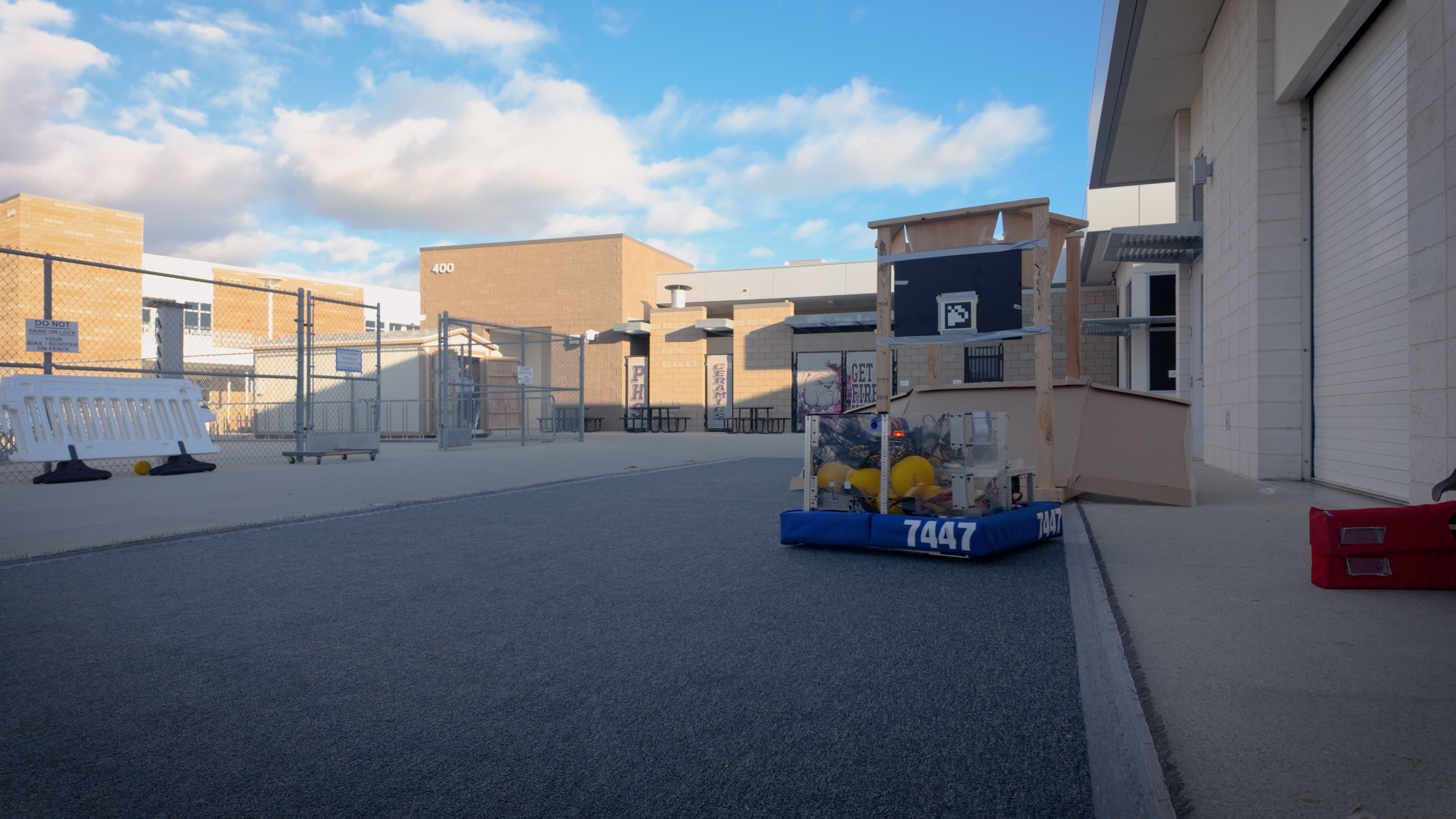
Swerve drive and an over-the-bumper intake keep cycles short.
Our 2026 robot starts with mobility. The drivetrain is designed to strafe, rotate, and recover cleanly, while the intake is built to pull FUELS straight off the carpet without demanding a perfect approach angle from the drivers.
Each wheel can drive and steer independently, so the robot can translate and rotate at the same time when lining up, dodging traffic, or resetting for the next pickup.
The intake hands pieces off directly into the scoring path, cutting down the time between acquisition and the next controlled feed.
02
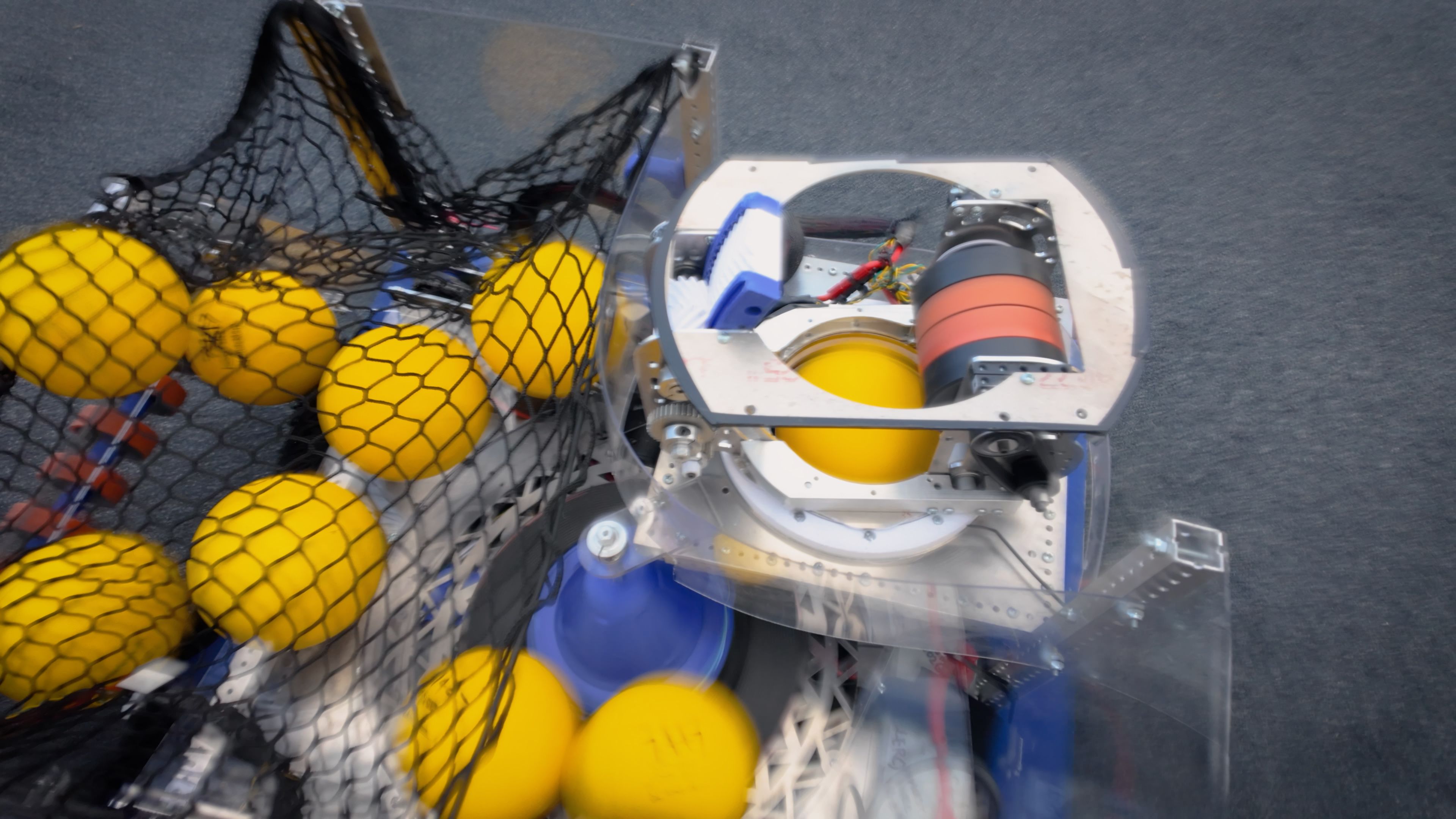
The feed path is tuned around controlled handoff, rotation, and shot setup.
A spinning indexer settles game pieces before they reach the shooter, which gives the rest of the robot a steadier starting point. From there, the turret and adjustable hood let the software choose better release geometry instead of forcing every shot to come from the same pose.
The indexer keeps incoming pieces more predictable, reducing messy transfers and making the shooter input more consistent when the robot is cycling at speed.
With 540 degrees of turret rotation and a hood that adjusts from 60 to 90 degrees, the robot can aim more flexibly while the drivetrain keeps moving.
03
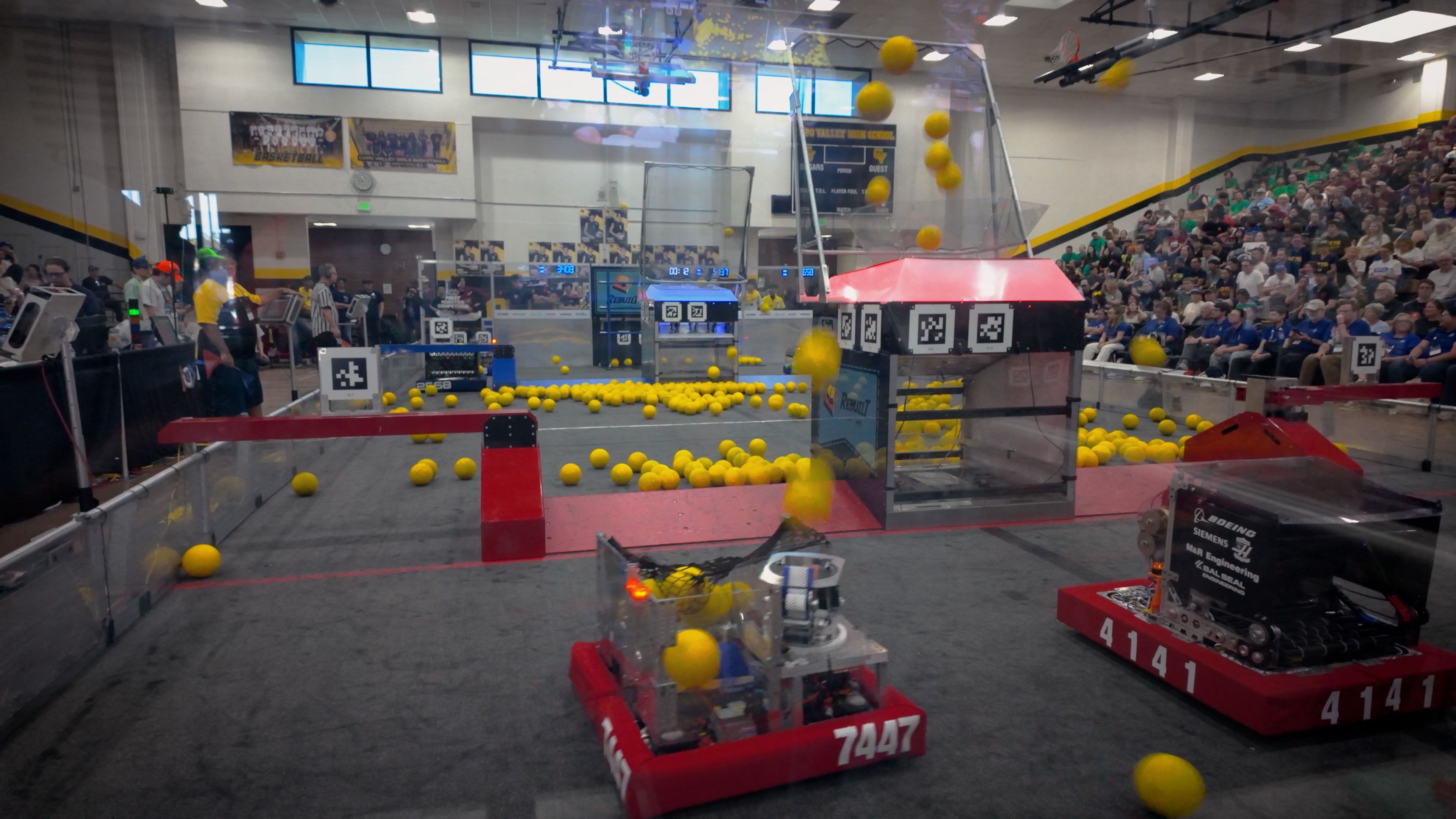
PhotonVision supports both aiming help and broader field awareness.
Vision is not just for spotting targets. PhotonVision gives the robot measurements that can support auto-aim behavior and also help stabilize the robot's field pose when combined with drivetrain data.
Camera measurements reduce the amount of manual alignment needed during fast scoring cycles while still leaving the drivers in control.
A steadier pose estimate makes it easier to revisit known shooting spots and gives autonomous or assistive routines more trustworthy context.
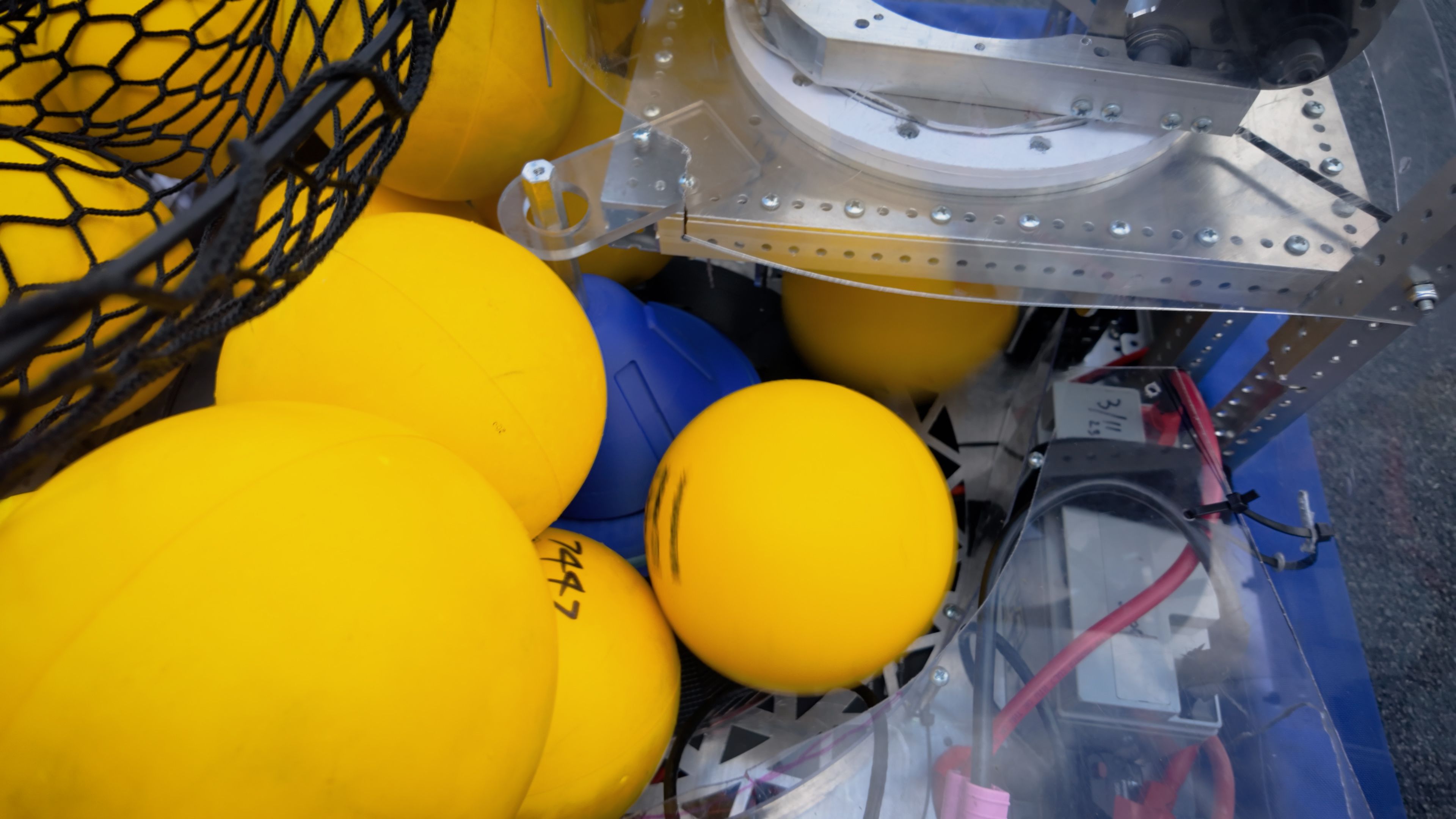
A tighter look at the intake path, storage volume, and upper structure.
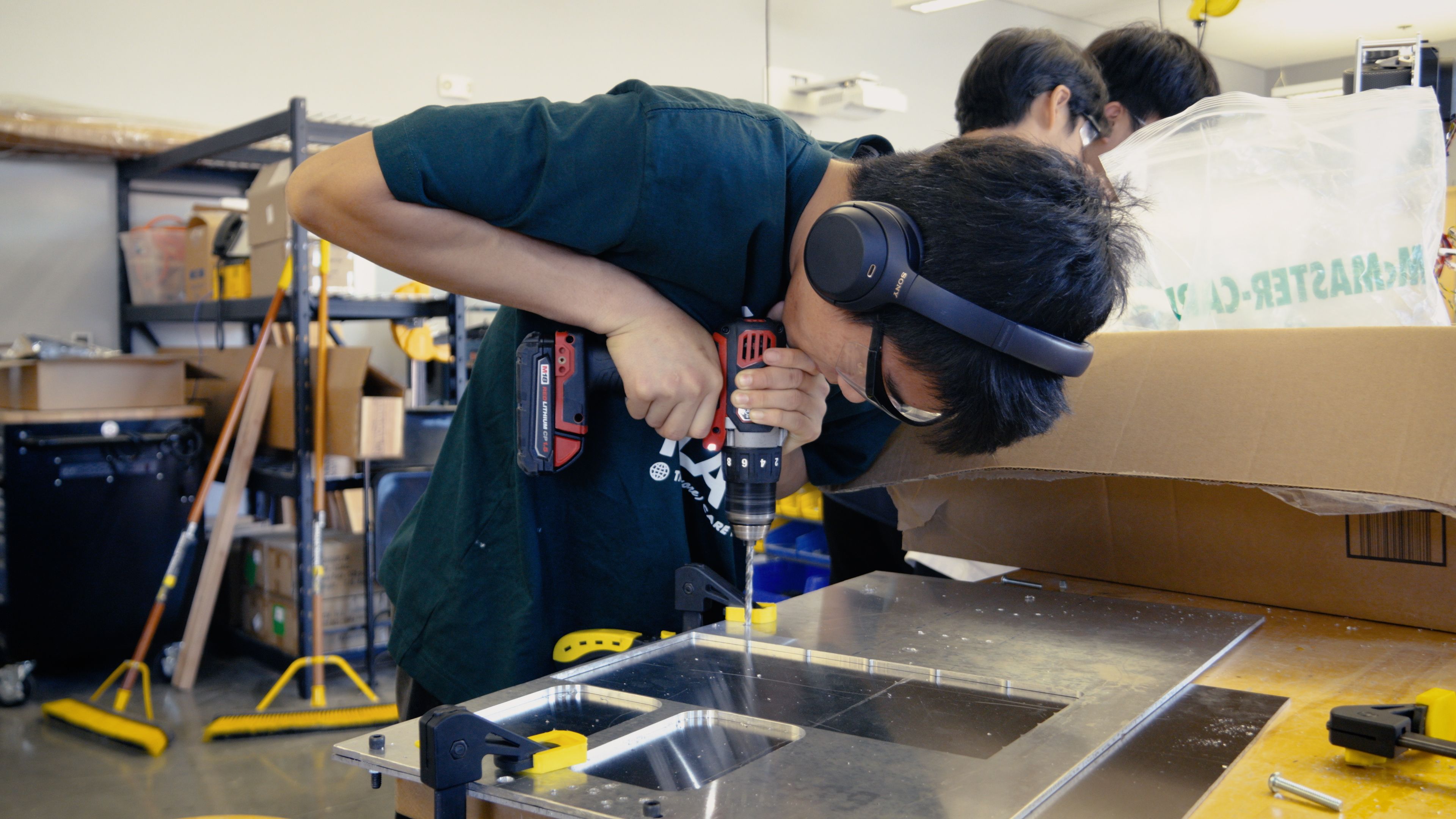
Machining and assembly work that turned the concept into a competition-ready structure.
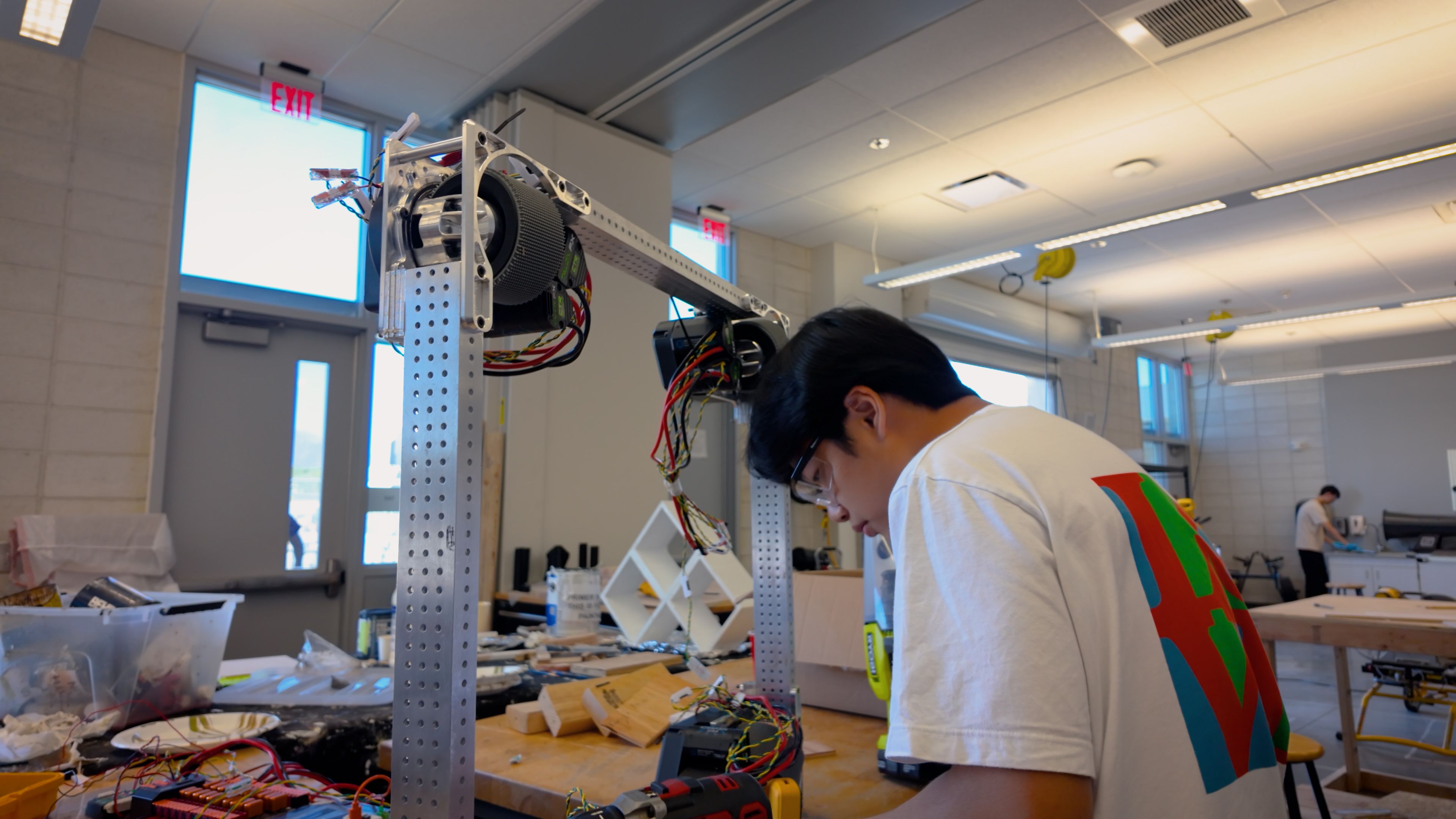
Turret and upper-assembly work in progress during the 2026 build season.
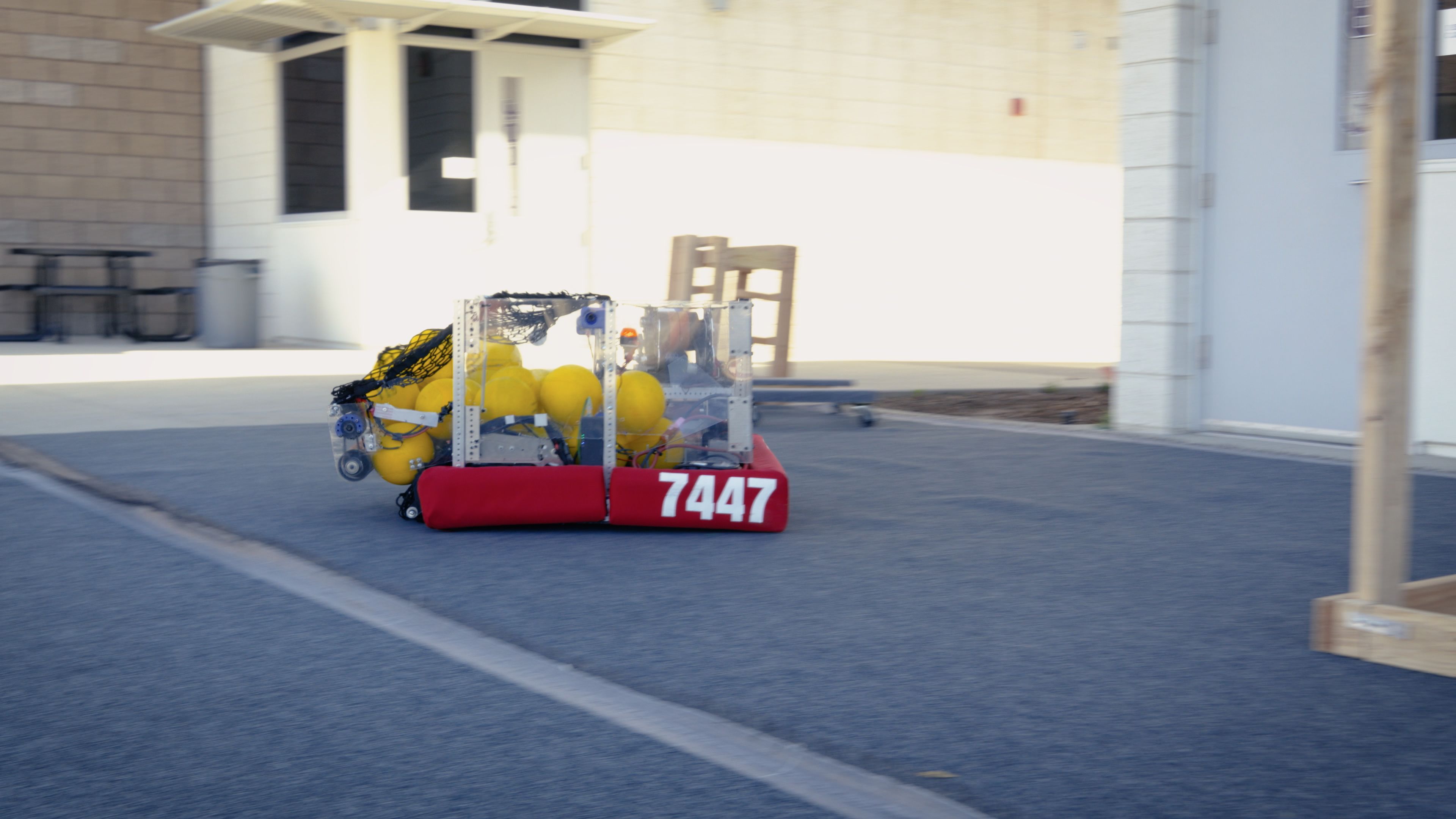
Outdoor reps to validate motion, packaging, and how the robot behaves at speed.
Explore more robots from our team on The Robots We Built.
Follow our Instagram (@frc7447) for more updates on our robot and the 2026 season.
